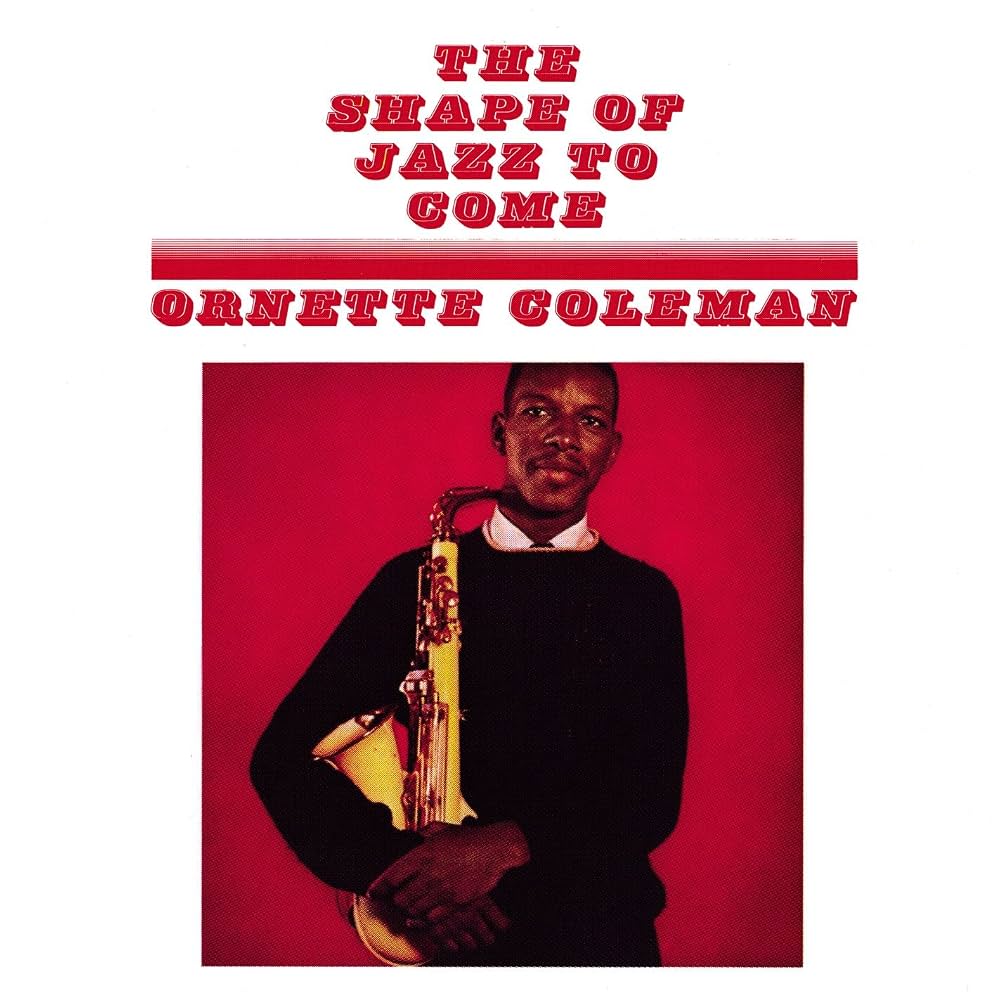

Ornette Coleman - The Shape of Jazz to Come LP vinyl record (Vinyl Me Please pressing)
Ornette Coleman - The Shape of Jazz to Come LP vinyl record (Vinyl Me Please pressing)
Couldn't load pickup availability
The Shape of Jazz to Come is the third studio album by American jazz musician Ornette Coleman. Released on Atlantic Records in November 1959, it was his debut on the label and his first album featuring the quartet of himself, trumpeter Don Cherry, bassist Charlie Haden, and drummer Billy Higgins. Coleman's quartet, like Gerry Mulligan's, was unusual in that it did not employ a chordal instrument such as a piano or guitar. Each composition contains a brief thematic statement, then several minutes of free improvisation, followed by a repetition of the main theme. While this resembles the conventional head-solo-head structure of bebop, it abandons the use of chord structures. The Shape of Jazz to Come found Coleman and his quartet elaborating on the sound and themes he had been developing throughout his career. One prominent feature of Coleman's signature sound was that he played a plastic Grafton saxophone, which contributed to the harshness of his timbre. He coined the term "harmolodic", a combination of harmony, movement, and melody, to describe his philosophy of improvisation which heavily emphasized melody rather than harmony. It was early in his career, in an attempt to further emphasize focus on melody over harmony, that he stopped including a piano as a part of his ensembles. Coleman continues with this tradition on The Shape of Jazz to Come, dispensing with harmonic accompaniment and focusing solely on improvised melodies and variations on themes and motifs. His use of microtonal intervals was central to his sound, and he even went as far as to suggest that the same pitch should sound different when played in different contexts, stating that "jazz is the only music in which the same note can be played night after night, but differently each time". The album was a breakthrough and helped to establish the free jazz movement. Later avant-garde jazz was often very different from Coleman's work, but the work helped to lay the foundation upon which much subsequent avant-garde and free jazz would be built.
Share